

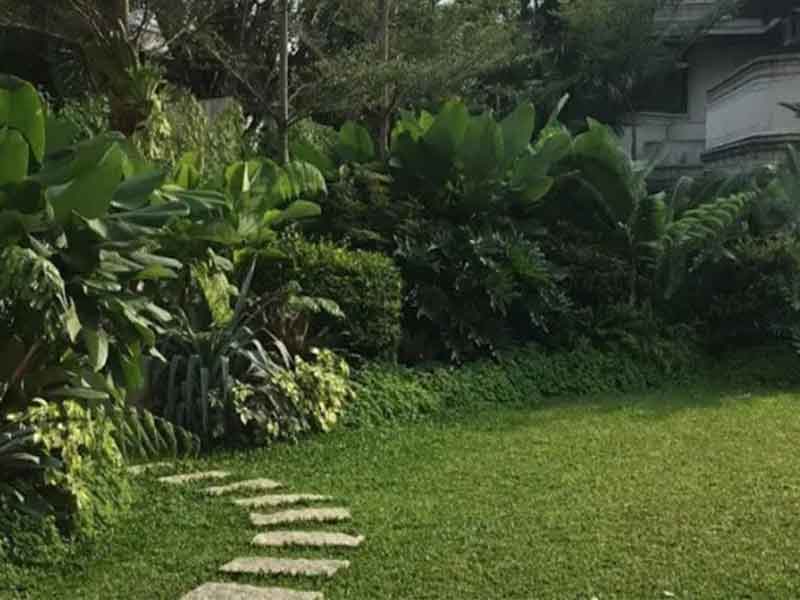
A Green Roof is the way of the future. Not only is it environmentally friendly and an essential tool in combating the effects of global warming and climate change, and in reducing the “heat island effect,” but it also translates into real energy savings.
Mackintosh Corporation specializes in waterproofing green roofs and provides and installs green roof systems up to and including the growing medium. Mackintosh uses Sika Sarnafil G476 PVC membrane (root resistant) for green roof waterproofing.

Green Roof Benefits
The benefits include increased energy efficiency (from cooling in the summer and added insulation in the winter), longer roof membrane lifespan, sound insulation, and the ability to turn wasted roof space into various types of amenity space for building occupants. Green roofs filter particulate matter from the air, retain and cleanse stormwater, and provide new opportunities for biodiversity preservation and habitat creation. They generate aesthetic benefits and help to reduce the “urban heat island effect” – the overheating of cities in the summer, which contributes to air pollution and increased energy consumption.
Energy Savings
In the summer, green roof planting shades the building from solar radiation and, through the process of evapotranspiration, can reduce, if not eliminate, any net heat gain. This in turn helps to cool the surrounding area, as well as decrease the amount of energy required to cool the building. In the cooler season, the additional insulation provided by the growing medium helps decrease the amount of energy required to heat the building. The extent of energy cost savings is a function of:
- the size of the building,
- its location,
- the depth of the growing medium, and
- the type of plants and other variables.
Modeling research suggests that the reduced need for air conditioning in the summer is more substantial than the value of the added insulation in the cooler season. Building type is a key factor in determining overall cost savings. For example, in one- or two-storey complexes where the roof is a large portion of the building envelope, cooling energy savings in the summer have been modeled as high as 25%. A 20 cm (8″) layer of growing medium and a thick layer of plants have a combined insulative value of RSI 0.14 (R20).
Roof Membrane Protection and Life Extension
Green roofs help protect roofing membranes from extreme temperature fluctuations, the negative impact of ultraviolet radiation, and accidental damage from pedestrian traffic. European evidence indicates that green roofs can easily double the lifespan of a conventional roof and thus decrease the need for re-roofing and the amount of waste material sent to landfill. These are direct operational cost savings for the building owner. Life cycle costing data, which includes the cost of deferred maintenance and replacement, suggests that green roofs cost the same or less than conventional roof systems.
Sound Insulation
Green roofs can be designed to insulate against sound, with the growing medium blocking lower frequencies and the plants blocking higher frequencies. Tests show that 12 cm (5″) of growing medium alone can reduce sound by 40 dB.
Urban Heat Island Effect
The urban heat island effect is the overheating of urban and suburban areas relative to the surrounding countryside, due to increased paved, built-over, and hard surface areas. Average summer temperatures have been rising over the past decade. These artificially high summer temperatures have a range of direct and indirect negative impacts on quality of life. The urban heat island effect increases electricity use for air conditioners and increases the rate at which chemical processes generate pollutants such as ground-level ozone. It also exacerbates heat-related illnesses. Green roofs intercept solar radiation that would otherwise strike dark roof surfaces and be converted into heat, thereby improving energy conservation. Like urban forests and reflective roofing surfaces, they absorb and/or deflect solar radiation so that it does not produce heat.
Stormwater Retention
Green roofs can be designed for exceptional stormwater retention capability. The plants capture and hold rainwater. Water stored in the growing media is released through evaporation and evapotranspiration. Stormwater retention rates are determined by saturated infiltration capacity, thickness of the growing media, field capacity, porosity, underdrainage layer water retention and flow, and relief drain spacing. A heavily vegetated green roof with a 20–40 cm (8–16″) thick growing medium can hold 10–15 cm (4–6″) of water.
Air Cleaning
Green roofs also filter out fine airborne particulate matter as air passes over the plants. Airborne particulates tend to get trapped on the surface areas of the greenery. Rain washes them into the growing medium below. Plants also absorb gaseous pollutants through photosynthesis and sequester them in their leaves (later becoming humus). Studies show that tree-lined urban streets have 10–15% fewer dust particles than similar streets without trees. In Frankfurt, Germany, for example, a street without trees had an air pollution count of 10,000–20,000 dirt particles per liter of air, while a tree-lined street in the same neighborhood had less than one-third of that amount. Based on data from trees, one estimate suggests that a grass roof with 2,000 m² of unmown grass (100 m² of leaf surface per m² of roof) could cleanse 4,000 kg of dirt from the air per year (2 kg per m² of roof).